DIY mattress cleaning that actually removes dust mites and stains
If your mattress looks fine on the surface but still feels a bit off, you are not imagining it. Dust mites, sweat, body oils, dead skin, and old spill marks can build up quietly over time. The good news? DIY mattress cleaning that actually removes dust mites and stains is possible at home, if you use the right method and do not rush the drying. A quick sprinkle of bicarbonate soda alone won't cut it, and neither will a damp cloth rubbed in a panic at 10pm. This guide shows you how to clean a mattress properly, what works for dust mite reduction, how to tackle stains without ruining the fabric, and when it makes sense to bring in a deeper clean.
You will also see a few realistic shortcuts, common mistakes, and the kind of practical detail that saves you from making a soggy mess. Let's face it, mattresses are one of those things we all use every day but rarely think about until a stain appears or allergies start acting up.
Why DIY mattress cleaning that actually removes dust mites and stains Matters
A mattress is not just another soft furnishing. It is where you spend roughly a third of your life, and it collects more than people usually realise. Dust mites thrive in warm, humid, fabric-rich environments, and mattresses provide exactly that. They are tiny, yes, but the residue they leave behind can be a problem for people with allergies or asthma, and for anyone who wants a genuinely fresher bed.
Stains matter too. A fresh tea spill is annoying; an old yellow patch from sweat or body oils is harder to shift and can become a permanent-looking mark if ignored. Over time, moisture can also seep into the deeper layers, and that is when odour starts to linger. Not pleasant. Not ideal.
What people often miss is that a mattress needs three things for real cleaning: physical removal of debris, targeted stain treatment, and proper drying. Skip one of those and you usually get a half-clean result. It may look better for a day, then the smell returns. Or worse, the fabric feels damp and the mattress starts to trap more dust.
For homes with pets, children, or busy schedules, regular mattress care is part of broader home hygiene, much like deep cleaning or a proper one-off cleaning when life gets on top of you. Mattress cleaning is one of those jobs that pays you back quietly, night after night.
How DIY mattress cleaning that actually removes dust mites and stains Works
Effective mattress cleaning works by combining dry cleaning, spot treatment, and controlled moisture. That combination matters because dust mites are not removed by scent alone, and stains do not lift just because a product smells fresh. You need a method that loosens allergens and dirt, lifts stains, and dries quickly enough to avoid mould or mildew.
Here is the simple science of it. Dust mites and their waste particles sit in dust, skin flakes, and fibres. Vacuuming with a good upholstery attachment removes a fair amount of loose material from the surface and upper layers. Heat can also help with some allergen reduction, which is why steam is often mentioned, but steam has to be used carefully. Too much moisture is the enemy if your mattress takes forever to dry.
For stains, the right cleaning action depends on the mark. Protein-based stains such as sweat, blood, or bodily fluids generally respond better to cool or lukewarm water and an enzyme-style or mild detergent approach. Grease marks from skin oils need absorption first, then gentle agitation. A drink spill often needs blotting before any solution is applied. In other words, one product for everything sounds tidy, but it usually isn't the best approach.
If you already use upholstery cleaning methods around the home, the principle will feel familiar: remove loose dirt first, treat the stain second, dry thoroughly third. Mattresses just need a little more patience, because they are thicker and far less forgiving if soaked.
Key Benefits and Practical Advantages
There are a few clear wins when you clean your mattress properly at home.
- Better sleep comfort: A cleaner mattress feels fresher, smells better, and does not carry that stale, slightly dusty note you notice most on humid nights.
- Reduced allergen load: Regular vacuuming and spot treatment can lower the amount of dust and residue sitting near the sleeping surface.
- Longer mattress life: Removing sweat, oils, and spills sooner helps prevent fabric damage and lingering odour.
- Lower cost: DIY cleaning is usually much cheaper than replacing the mattress early or booking a specialist visit for minor marks.
- Better hygiene after illness or accidents: If you have had a spill, night sweats, or a child's accident, quick action can make a huge difference.
There is also a practical benefit that gets overlooked: once you learn the process, you can handle future problems faster. A small stain does not need to become a weekend disaster. You spot it, treat it, dry it, move on. Nice and simple, in theory. In practice, it still takes a bit of care.
For households that already keep on top of house cleaning or schedule regular domestic cleaning, mattress maintenance fits neatly into the same routine. It is one of those "small effort, big difference" jobs.
Who This Is For and When It Makes Sense
DIY mattress cleaning is a good fit for many people, but not every situation. If the mattress has light to moderate staining, a dusty smell, or general dullness, DIY is usually the sensible first step. It also makes sense if you are managing regular upkeep between more thorough cleans.
You will especially benefit from this approach if:
- you wake up with a stuffy nose and want to reduce dust buildup around the bed;
- you have children, pets, or both, and small accidents happen from time to time;
- you are preparing a room for guests or refreshing a spare bed;
- you are moving out and need the bedroom to look and smell cleaner;
- your mattress has surface stains but is otherwise in decent condition.
It makes less sense if the mattress has deep water damage, visible mould, a strong persistent smell that does not improve, or a stain that seems to have soaked right through. At that point, DIY can sometimes make things worse by spreading moisture or pushing the mark deeper. If you are unsure, stop and assess before adding more liquid. Seriously. More product is not always better.
This is also where broader cleaning support can help, especially after renovations or a big life event. A mattress deep clean often sits alongside spring cleaning, bedroom cleaning as part of a home routine, or even end of tenancy cleaning if you are trying to leave a room in good condition. The context matters.
Step-by-Step Guidance
The method below focuses on the kind of DIY mattress cleaning that actually removes dust mites and stains, not just surface freshness. Take your time. A mattress is forgiving in some ways, but not when it comes to over-wetting.
1. Strip the bed completely
Remove sheets, mattress protectors, blankets, and pillows. Wash all removable bedding separately at the highest safe temperature for the fabric. This step matters because there is little point cleaning the mattress and then putting dusty bedding straight back on top of it. If you have a washable mattress protector, clean it now too.
2. Vacuum slowly and thoroughly
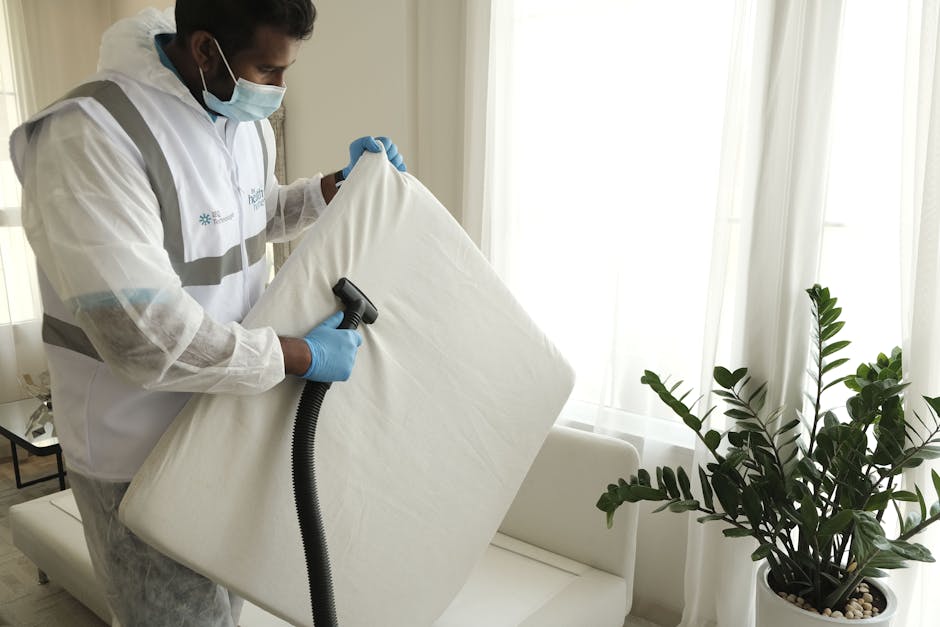
Use a vacuum with an upholstery attachment. Go over the entire surface, seams, tufts, buttons, and edges. Move slowly. A quick sweep misses the grit and dust hiding in folds. If your vacuum has strong suction, use that; if it has a brush head, use it gently so you do not rough up the fabric. You are lifting debris, not scrubbing a patio.
3. Treat fresh stains first
Blot, do not rub. That old advice is still right. Use a clean, white cloth or paper towel to lift as much of the spill as possible. For liquid stains, work from the outside in so the mark does not spread. Use only a small amount of the chosen solution. Too much liquid is where many people go wrong.
4. Use the correct stain treatment
Different stains need different handling:
- Sweat and body oil: Use a light paste of bicarbonate soda and a small amount of water, or a mild upholstery-safe cleaner. Leave briefly, then lift with a slightly damp cloth.
- Blood: Use cold water only at first. Warm water can set the stain. Dab gently until the mark starts to fade.
- Urine: Blot immediately, then use an enzyme-safe cleaner if available. Follow with light odour neutralising and thorough drying.
- Food or drink: Blot first, then apply a mild cleaning solution. Sparkling water is sometimes used for fresh spills, but it is not a miracle fix.
- General yellowing: This often needs patient treatment and may not disappear fully if it has been there for months. Honest answer, that happens.
A light foam cleaner or a cleaner designed for fabric furniture can be useful here. If you already use a spot cleaner around the house, check that it is suitable for mattresses and does not over-saturate the surface.
5. Reduce dust mites with dry methods and controlled heat
After vacuuming, you can use a fabric-safe steam treatment if the mattress manufacturer allows it and you are confident it can dry quickly. Steam can help disrupt allergens and loosen embedded dirt, but only if used lightly and evenly. Keep the nozzle moving and do not hold it in one place. If you see water droplets forming, you are using too much.
If steam is not suitable, focus on thorough vacuuming, airing the mattress, and using a mattress encasement afterwards. That will not magically erase every allergen, but it does help reduce what sits in the sleeping surface. For many homes, that is the realistic win.
6. Neutralise odours
Bicarbonate soda can help absorb odour if sprinkled lightly over the dry mattress and left for a few hours before vacuuming. It is best treated as an odour absorber, not a stain remover. Do not pack it on thickly; more powder just means more vacuuming later. A thin, even layer is enough.
7. Dry the mattress completely
This is the step people rush, and it is the most important one. Open windows if the weather allows, turn on heating lightly if needed, and use a fan to move air across the surface. If possible, stand the mattress on its side for a while so air reaches both sides. A mattress that feels even slightly damp should not be made up straight away. Dampness can lead to musty smells or worse.
In our experience, the room often smells cleaner by late afternoon if drying has been done well. If not, wait longer. Patience is irritating here, but it pays off.
8. Protect the mattress after cleaning
Once fully dry, fit a breathable mattress protector or encasement. This is one of the simplest ways to reduce dust mite build-up and stop future spills reaching the fabric. If you have gone to the trouble of cleaning properly, this final layer makes the effort worth it.
Expert Tips for Better Results
Small adjustments make a big difference. Here are the habits that tend to separate an okay result from a proper one.
- Test cleaning solutions first: Try them on a hidden patch or a corner. Some fabrics react badly, even when the cleaner looks harmless.
- Use white cloths: They let you see what you are lifting and avoid dye transfer.
- Work in daylight: Natural light makes stains easier to spot. The morning often shows up problems you missed at night.
- Keep liquids minimal: If you need to ask whether the mattress is too wet, it probably is.
- Clean both sides if possible: Not every mattress can be flipped, but if yours can, treat the underside too.
- Vacuum the bed frame and base: Dust around the mattress ends up back on it. Annoying, but true.
One more thing: if you are dealing with a bedroom that generally feels dusty, it may be worth looking beyond the mattress itself. Curtains, carpets, and soft furnishings all feed the same cycle. A cleaner mattress helps, but a dusty room will undo some of the progress. That is why people often pair mattress care with carpet cleaning or broader home cleaning work.
And yes, sometimes the smallest improvement is the one you notice most. Fresh sheets on a clean mattress just feel better. You know it when you lie down.
Common Mistakes to Avoid
Most mattress cleaning problems come from using too much water, using the wrong product, or trying to rush the job. Here are the main traps.
- Soaking the mattress: A wet mattress takes ages to dry and can develop odour or mildew.
- Scrubbing stains aggressively: That pushes the stain deeper into the fibres and can rough up the fabric.
- Using bleach or harsh chemicals: These can damage the mattress cover and leave strong fumes.
- Ignoring the seams: Dust and debris gather around stitching and edging, so those spots need attention.
- Replacing the bedding too soon: If the mattress is still cool or slightly damp, wait.
- Expecting every stain to vanish: Older stains can fade significantly without disappearing completely. That is still a win.
A common one, and a slightly silly one if we are honest, is cleaning the mattress at night and then wondering why it still feels damp the next morning. Give it the room, the air, and enough time. The mattress is not trying to be difficult. It just needs drying properly.
Tools, Resources and Recommendations
You do not need a van full of gear, but the right tools help a lot. A basic kit makes the job easier and safer.
| Tool | What it does | Why it helps |
|---|---|---|
| Upholstery vacuum attachment | Lifts dust, skin flakes, and loose debris | Helps reduce dust mite food sources and surface build-up |
| Microfibre cloths | Blot stains and lift residue | Low-lint and more controlled than a towel |
| Mild upholstery cleaner | Treats general marks | Useful for spot cleaning without flooding the fabric |
| Bicarbonate soda | Helps absorb odours | Good for freshening dry mattresses before vacuuming |
| Fan or open-window ventilation | Speeds drying | Critical for preventing lingering moisture |
| Mattress protector | Creates a barrier against spills and dust | Makes future cleaning easier |
If you want a broader cleaning setup for the rest of the room, it can help to think in layers: the mattress, the flooring, and the surrounding soft furnishings. That might mean adding rug cleaning if the room has a thick rug, or booking upholstery cleaning for fabric chairs or a headboard. The bedroom tends to collect dust in clusters, not neatly in one place.
For people who prefer a professional-style finish, a good cleaning company can be a sensible backup when the stain is stubborn or the mattress needs more than a surface refresh. No shame in that at all.
Law, Compliance, Standards, or Best Practice
For a household mattress, there is usually no special legal requirement to clean it in a particular way. Still, best practice matters, especially if you live in rented accommodation, run a short-let, or are cleaning on behalf of others. In the UK, landlords and tenants typically share responsibility for reasonable care and cleanliness depending on the tenancy terms, and a mattress should be handled without causing damage.
If you are cleaning in a furnished rental or after a tenancy, follow the inventory, treat stains carefully, and avoid methods that could void a care instruction from the mattress maker. Manufacturer guidance is worth checking before using steam or heavy moisture. That sounds obvious, but people skip it more than you might think.
Health and safety best practice is straightforward:
- use gloves if you are dealing with body-fluid stains;
- ventilate the room well during and after cleaning;
- avoid mixing cleaning chemicals;
- keep electrical equipment away from wet areas;
- allow full drying before use.
If you are cleaning for a business, hospitality setting, or managed property, there may be additional internal standards, insurance expectations, or cleaning records to keep. That is one reason some people choose a service with documented insurance and safety policies in place. It is not about being overly formal; it is about avoiding headaches later.
Options, Methods, or Comparison Table
There are a few ways to clean a mattress at home. The right choice depends on the stain, the mattress type, and how much time you have.
| Method | Best for | Pros | Limitations |
|---|---|---|---|
| Vacuum + spot treatment | General dust, light marks, routine upkeep | Fast, low cost, low risk | May not fully lift deep or old stains |
| Bicarbonate soda deodorising | Odour control on a dry mattress | Simple and accessible | Does not clean stains or remove deep debris by itself |
| Light steam treatment | Some allergen reduction and surface refresh | Can loosen grime | Risk of over-wetting if misused |
| Enzyme cleaner for accidents | Urine, vomit, other organic stains | Targeted action on biological residue | Must be used correctly and dried well |
| Professional mattress or upholstery clean | Severe staining, lingering odour, time pressure | Deeper extraction and more consistent results | Higher cost than DIY |
For many homes, the best answer is a mix: do the regular upkeep yourself, then bring in a deeper service if the mattress starts showing stubborn marks or a stubborn smell. That is usually the most sensible balance of effort and result.
Case Study or Real-World Example
Here is a realistic example from a typical household situation. A couple in a London flat noticed that their guest bed had a faint musty smell and two old stains near the edge. Nothing dramatic, just enough to make them hesitate before letting anyone sleep on it.
They stripped the bedding, vacuumed the whole surface carefully, and identified the older marks as likely sweat and drink stains. The lighter one responded to a mild upholstery cleaner and blotting. The darker patch took a second round, but they kept the liquid use minimal. After that, they sprinkled a thin layer of bicarbonate soda to help with odour, left it for a few hours, and vacuumed again. A fan then ran for most of the afternoon with the window open.
The result? The mattress looked cleaner, smelled fresher, and felt less stuffy. The older stain did not vanish completely, which is normal, but it faded enough that the bed could be used comfortably again. They also added a protector afterwards, which is honestly the bit that usually saves people the next time a cup of tea lands in the wrong place.
It is a small example, but a useful one. Not every mattress cleaning job is about perfection. Sometimes it is about restoring a sleeping space to a point where it feels fresh, safe, and easy to live with again.
Practical Checklist
Use this quick checklist before, during, and after cleaning.
- Strip the bed completely.
- Wash bedding and protector separately.
- Vacuum the mattress slowly, including seams and edges.
- Blot fresh stains before applying any cleaner.
- Use the right cleaner for the stain type.
- Keep moisture low and controlled.
- Allow the mattress to dry fully.
- Ventilate the room well.
- Vacuum again if residue remains after drying.
- Fit a clean mattress protector once dry.
Quick expert summary: If you remember only three things, make them these: vacuum first, use minimal liquid, and dry thoroughly. That is the backbone of DIY mattress cleaning that actually removes dust mites and stains. Everything else supports those three steps.
Get a free quote today and see how much you can save.
Conclusion
A clean mattress is one of those quiet comforts that affects your day more than you think. When the surface is free of dust, the stains are handled properly, and the bed is fully dry, the whole room feels lighter. You sleep better. You breathe easier. The bed just feels looked after.
DIY mattress cleaning that actually removes dust mites and stains is not about fancy products or soaking the fabric in hope. It is about the right order, the right amount of moisture, and enough drying time to finish the job properly. Do that well, and you can make a genuine difference without spending a fortune.
If the stain is old, the odour is stubborn, or the mattress is in rough shape, there is no harm in stepping back and deciding whether a professional clean would be the better call. But for everyday upkeep, a careful DIY method goes a long way. Small effort, real payoff. And that is pretty satisfying, to be fair.
Frequently Asked Questions
Does DIY mattress cleaning really remove dust mites?
It can significantly reduce dust mite build-up, but it is more accurate to say it lowers the dust and debris that dust mites live in. Vacuuming, careful surface cleaning, and using a mattress protector are the most practical home steps. For severe allergy concerns, a deeper clean or specialist treatment may be worth considering.
What is the best homemade cleaner for mattress stains?
There is no single best option for every stain. Mild upholstery cleaner works for many marks, while cold water is best for fresh blood stains. Bicarbonate soda can help with odour, but it is not a complete stain remover. Matching the cleaner to the stain type usually gives better results than using one all-purpose mixture.
Can I use a steam cleaner on my mattress?
Sometimes, yes, but only with caution. Steam can help loosen dirt and reduce surface allergens, yet too much moisture can damage the mattress or lead to mould if it dries slowly. Always check the care guidance first and use light, controlled steam rather than soaking the fabric.
How long does a mattress take to dry after cleaning?
It depends on how much liquid you used, the room temperature, and airflow. A lightly cleaned mattress may dry in a few hours, while a more damp one can take much longer. If it still feels cool or slightly wet, it needs more time before you remake the bed.
Why does my mattress smell after cleaning?
An ongoing smell usually means the mattress was not fully dried, the stain was not completely removed, or moisture went deeper into the layers. Ventilation and patience help a lot here. If the smell persists after thorough drying, the issue may be deeper than the surface.
How often should I clean my mattress?
For most homes, vacuuming every few months and spot cleaning as needed is a sensible routine. If you have allergies, pets, or children, more frequent care may help. A deep clean is usually worth doing when you notice visible marks, odour, or a general build-up of dust.
Will bicarbonate soda remove yellow stains?
Usually not on its own. Bicarbonate soda is better for odour absorption than stain removal. It can help freshen the mattress, but yellowing from sweat or age often needs a targeted cleaner and careful blotting.
Is it safe to clean a memory foam mattress at home?
Yes, but memory foam needs extra caution because it absorbs moisture easily. Use minimal liquid, avoid soaking, and make sure it dries fully. If a mattress label gives special instructions, follow those first.
What should I do about urine stains on a mattress?
Blot the area immediately, then use an enzyme-based or urine-safe cleaner if you have one. Keep the liquid amount low, then dry the mattress thoroughly. A mattress protector is especially useful after an accident like this, because it prevents the same problem becoming a repeat event. Which, let's be honest, nobody wants.
Can I use washing-up liquid to clean a mattress?
You can use a very small amount in some cases, but it is not always the best choice. It can leave residue if overused. A cleaner made for upholstery or fabric is usually better because it is designed for this type of job and is easier to rinse out lightly.
When should I call a professional instead of doing it myself?
If the mattress has deep stains, a strong lingering smell, mould, or water damage, a professional clean may be the safer option. It can also help if you do not have the time or equipment to dry the mattress properly. For a lot of routine issues, DIY is fine. For the stubborn stuff, get help early.
Do mattress protectors really make a difference?
Yes, they do. A good protector reduces direct contact with sweat, spills, and dust, which makes the mattress easier to keep clean over time. It is one of the simplest ways to stop the same problem coming back every few months.